
Tracing the Ganga to the Realm of the Gods
Rishikesh – Gangotri – Bhojbasa – Gomukh – Tapovan
Some journeys are not planned by maps. They are guided by faith, stories heard since childhood, and a quiet call that grows louder with time. My journey from Rishikesh to Tapovan, walking upstream to the very origin of the Ganga, felt less like travel and more like answering such a call.
Rishikesh: Where the River Becomes a Teacher
In Rishikesh, the Ganga flows calm and wide, embraced by ghats, ashrams, and chanting voices. Here she is a mother—gentle, forgiving, and accessible. As the evening aarti lights flicker on the water, it is hard to imagine that this same river is born from ice and silence high in the Himalayas. And yet, that is where the road leads.
Leaving Rishikesh, the plains slowly surrender to the mountains. With every bend, the river narrows, quickens, and seems to remember her ancient strength.
Gangotri: Where Faith Takes Form
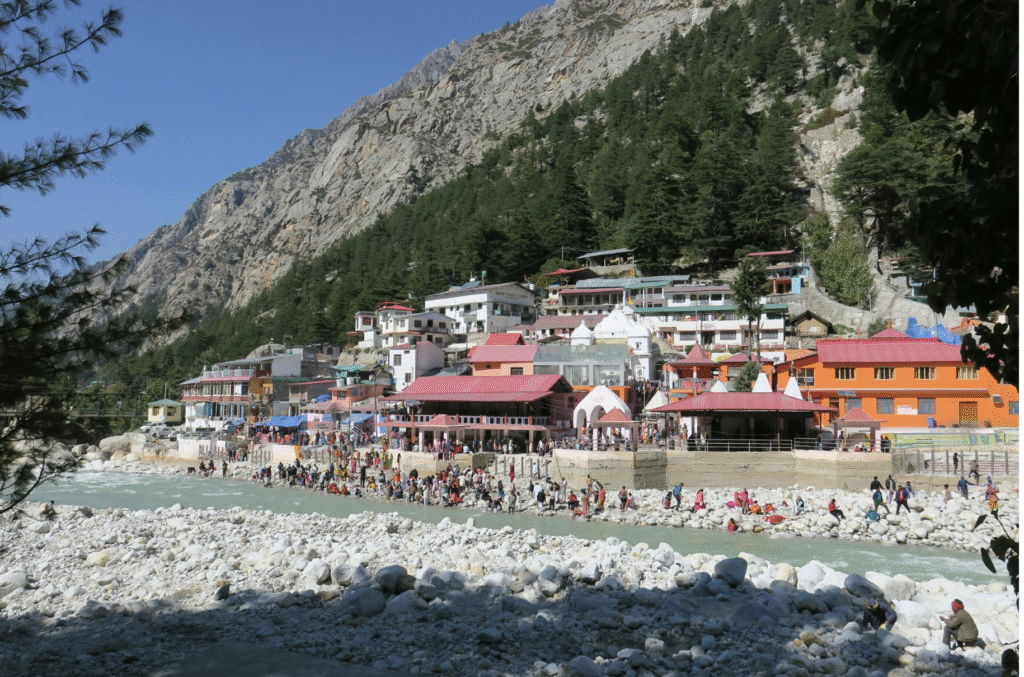
Gangotri is not just a town; it is a threshold. Surrounded by towering peaks and pine forests, the Gangotri Templestands as a reminder of the legend of King Bhagiratha, whose penance brought the celestial Ganga down to earth for the salvation of his ancestors.
Here, the river is still called Bhagirathi, young and fierce. Devotees bow, pilgrims pray, and travelers pause—knowing that beyond this point, the journey belongs more to the mountains than to man.
Bhojbasa: The Hermitage of Silence
The trail from Gangotri follows the roaring Bhagirathi through a vast, open valley. Gradually, human presence thins out, replaced by wind, stone, and sky. Bhojbasa, named after the Bhojpatra (birch trees) once used by sages to write scriptures, feels like an ancient ashram carved into the landscape.
Nights here are cold and quiet. Under a sky heavy with stars, it is easy to imagine rishis meditating in caves, seeking truths beyond words. Bhojbasa teaches stillness—the kind that settles not just around you, but within you.
Gomukh: The Mouth of the Goddess
From Bhojbasa, the path grows raw and elemental. Rocks replace trails, and the air thins with altitude. And then, suddenly, Gomukh appears—the snout-like opening of the glacier, roaring with meltwater, alive and untamed.
This is where the Ganga is born.
Standing before Gomukh is overwhelming. The river that nourishes millions begins here as icy torrents bursting from the glacier’s mouth. According to legend, Lord Shiva caught the force of the descending Ganga in his matted locks, releasing her gently to the earth. Watching the water surge forward, that myth feels less like a story and more like memory.
Tapovan: Where Shiva Meditated
Above Gomukh lies Tapovan, a high alpine meadow watched over by the mighty Mount Shivling. Reaching Tapovan requires effort—steep climbs, unstable terrain, and determination—but the reward is beyond measure.
Tapovan feels sacred in a way that words cannot fully capture. It is said that sages and Lord Shiva himself performed tapasya here. The vast green meadows, grazing blue sheep, and the constant presence of snow-clad peaks create a space where time seems irrelevant.
Here, the mind quiets. Ego dissolves. You don’t pray—you simply exist.
The Return: Carrying the Mountains Home
The return journey follows the same path, but the experience is different. You walk lighter, quieter, changed in small, invisible ways. Somewhere between Tapovan and Rishikesh, the river transforms again—from glacier-born force to guiding presence.
When you finally see the Ganga flowing calmly in Rishikesh, you understand her fully—not just as a river, but as a journey. From silence to sound, from ice to life, from the divine to the human.
Closing Thoughts
This journey is not about adventure alone. It is about humility—about walking where myths were born and realizing that faith, nature, and time are deeply intertwined.
To travel to Gomukh and Tapovan is to walk upstream—not just against the river, but against distraction, noise, and haste. And in doing so, you find something rare: perspective